
In our lab, we differ in many ways, from where we come from geographically and socioeconomically to how we live and identify. What we share is a commitment to making our communities more diverse, equitable, inclusive, and just, and to creating a space where we all feel safe, welcomed, respected, and empowered, not in spite of but because of our differences. We strive for excellence as scholars, as scientists, as teachers, and as members of our communities, which include our lab group, our department, our university, our fields of study, our scientific societies, and our city, Charlottesville, VA. We achieve excellence by including, listening to, and advocating for individuals representing a diversity of experiences.
Engaging with our lab mates and fellow members of the scientific community is, for us, one of the best parts of our job. We cultivate and celebrate our team, and we aim for the members of our lab and community to share this feeling of belonging. We do so by, for example:
- Actively listening to one another
- Working collaboratively
- Being flexible
- Giving constructive feedback that promotes other’s success
- Openly sharing tips, tricks, ideas, materials, techniques, and data
- Meeting weekly to check in and update one another
- Including scientists of all levels on our team, from undergraduates to faculty
- Treating one another respectfully, as professionals and colleagues, irrespective of background
- Respecting one another’s time
- Exchanging snacks. Good snacks.
We also recognize that exclusionary and discriminatory practices at academic and scientific institutions has made them inaccessible and hostile for many. The responsibility to change this lies with all of us. We commit to effecting change by, for example:
- Informing our actions by educating ourselves on systemic exclusion in our communities
- Seeking opportunities to learn and acknowledge the historical context of our field (the good and the ugly) and to teach marginalized perspectives in the classroom
- Investing in recruiting and mentoring trainees from marginalized groups
- Committing to equitable and inclusive hiring practices
- Removing barriers from our work environment
- Reserving time for discussing concerns about inclusivity and safety, and rewarding open dialogue with appropriate changes
- Expanding our idea of “excellence” to include skills, efforts, and experiences that have been historically undervalued
- Making thoughtful, equitable decisions about who we choose to work with, invite, nominate, and cite
- Addressing actions or words that do not uphold our lab values and supporting one another in working towards our goals as a lab
We support the department’s Statement on Diversity, Equity and Inclusion, its Goals and Action Items, and its Code of Conduct. We acknowledge and pay respect to the custodians of this land, the Monacan Nation.
You can find further resources and support via UVA’s Division for Diversity, Equity and Inclusion and Office for Equal Opportunity and Civil Rights, academic accommodations at the Student Disability Access Center, mental health counseling at CAPS, TimelyCare, and Madison House, emergency financial support through Student Financial Services, and help in cases of gender-based or other interpersonal violence at the Women’s Center and Just Report It. For lab members, internal resources and reading materials can be found in our Lab Values Box folder.
~ The Gibson Lab, 1/1/2021, updated on: 1/27/2022, 1/20/2023, 1/29/2024, and 2/3/2025. This is a living outline of our values and guidelines. We will revisit it annually to determine if we’re acting in a manner that prioritizes our values and revise it to reflect changes in our community.
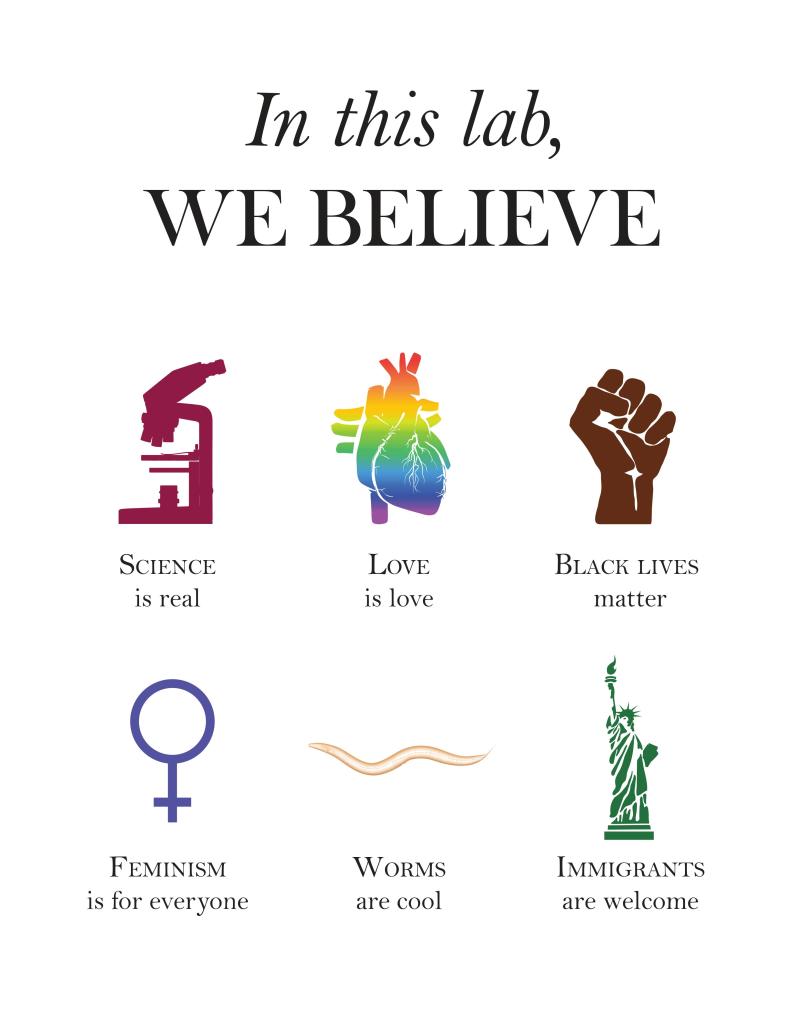
https://sammykatta.com/diversity
The pledge: “[This poster is] meant to show that racial justice and support for marginalized communities cannot be separated from the practice of science. We must actively work to recognize the obstacles that scientists (and potential scientists) from marginalized communities face, and dismantle structures of power that prevent them from succeeding. We must also consider the effects of our research and research choices on marginalized communities.”


 the Gibson Lab